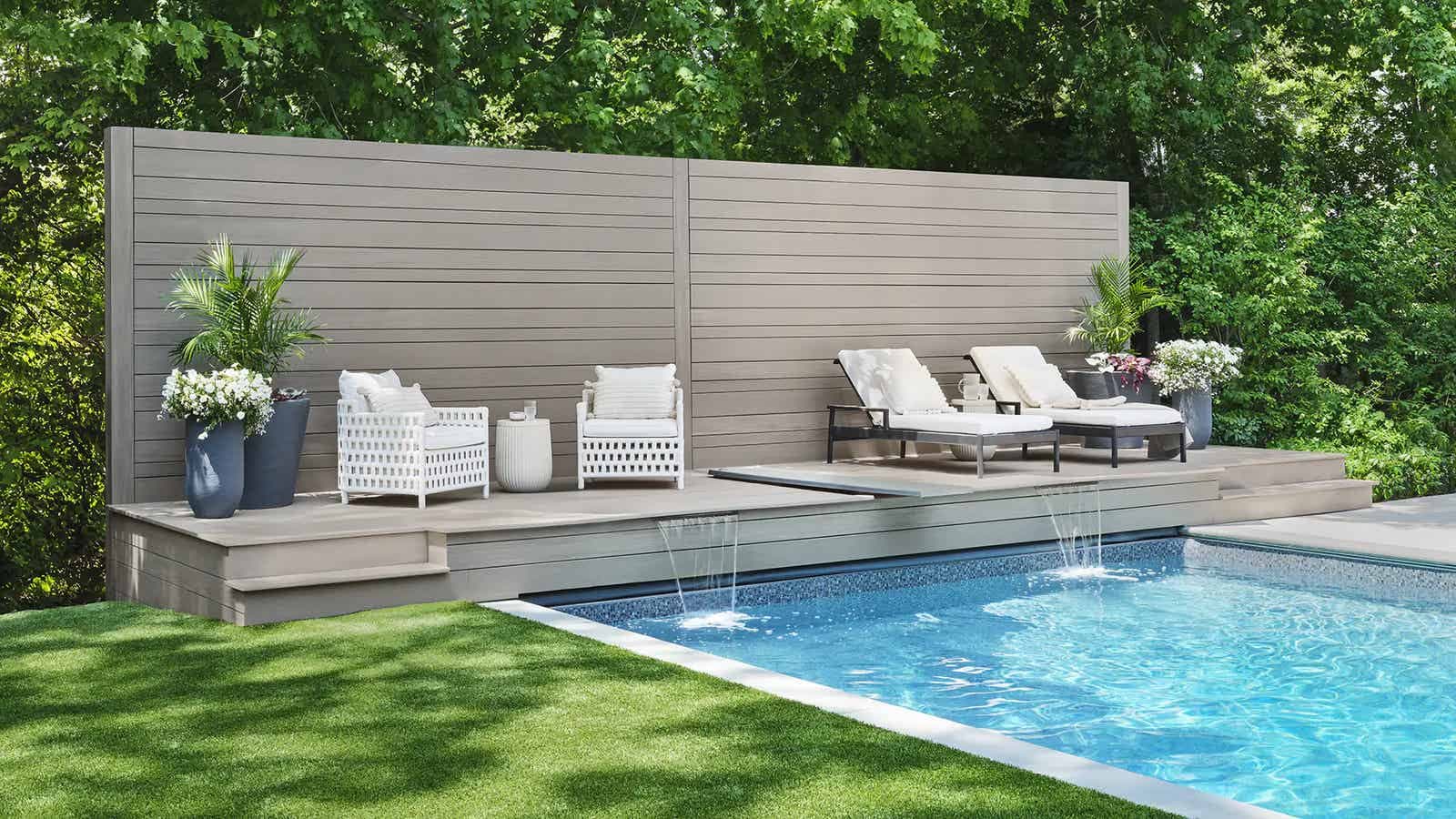
Why Ventilation Matters for AZEK PVC Decking
While AZEK PVC decking is engineered with zero wood content and a capped polymer construction, making it highly resistant to moisture, rot, and insects, the substructure beneath is typically made of wood. Proper ventilation is essential to protect this wooden framework from moisture accumulation. Stagnant, humid air trapped under a deck can create an environment conducive to mold and mildew growth on joists and beams, potentially compromising their integrity over time.
Beyond protecting the sub-structure, good airflow also contributes to the overall stability of the decking. Although AZEK PVC is dimensionally stable, extreme temperature fluctuations combined with trapped moisture can still create conditions that are less than ideal. Ensuring consistent air movement helps moderate temperatures and manage moisture levels, supporting the long-term performance and appearance of the entire deck system.
Key Principles of Under-Deck Ventilation
Effective under-deck ventilation relies on creating a continuous path for air to move freely. This typically involves allowing air to enter from one side of the deck and exit from another, often facilitated by natural convection. The goal is to avoid dead air pockets where moisture can become trapped.
Consider the design of your deck and its surroundings. Is it low to the ground, enclosed by skirting, or built over a damp area? Each scenario presents unique ventilation challenges that need to be addressed in the planning phase. Adequate spacing between deck boards, while important for drainage, is not a substitute for comprehensive under-deck airflow.
Planning for Airflow: Design Considerations
When designing your deck, incorporate ventilation strategies from the ground up. For decks close to the ground (under 18 inches), this becomes especially critical. Raised decks naturally benefit from better airflow, but even they can have areas where air gets trapped.
If your deck will have skirting or fascia, plan for intentional openings. These can be decorative vents, lattice panels, or simply strategic gaps in the skirting. The total area of these openings should be sufficient to allow for cross-ventilation. A common guideline suggests a minimum of 1 square foot of unobstructed vent area for every 100 square feet of deck surface, distributed evenly on opposing sides.
For decks built over concrete slabs or areas prone to standing water, consider additional measures such as grading the ground away from the house, installing a vapor barrier, or using a drainage system to prevent moisture from wicking up into the sub-structure. Even with AZEK PVC's resistance, keeping the environment beneath dry is always beneficial for the entire assembly.
Worked Example: Ventilating a Skirted Deck
Let's consider a hypothetical 10-foot by 16-foot AZEK PVC deck (160 square feet) that will be skirted on three sides, with one side open to a patio. The deck will be approximately 12 inches off the ground.
Using the guideline of 1 square foot of vent area per 100 square feet of deck, this 160 square foot deck requires a minimum of 1.6 square feet of total vent area. To ensure effective cross-ventilation, these vents should be distributed on opposing sides.
If the deck is skirted on two 10-foot sides and one 16-foot side, we could plan for two vent panels on each 10-foot side and three on the 16-foot side. If each vent panel provides 0.25 square feet of clear opening, then 7 panels would provide 1.75 square feet of ventilation (7 x 0.25 sq ft), meeting the minimum requirement. It is important to confirm the actual unobstructed airflow area of any chosen vent product.
For a low-clearance deck like this, ensuring the ground beneath is properly graded and potentially covered with a gravel layer or vapor barrier will further enhance moisture management. The AZEK PVC decking itself will be installed with appropriate board spacing as specified by the manufacturer, which assists with surface water drainage but does not replace under-deck airflow.
Product Links for Your Decking Project
Explore the full range of AZEK PVC decking options to find the perfect style and color for your project:
AZEK PVC Decking: https://lumberplus.com/brands/azek
Consider complementary products for a complete deck system:
All Decking Materials: https://lumberplus.com/decking
Hardwood Decking (for comparison): https://lumberplus.com/decking/hardwood
Composite Decking (for comparison): https://lumberplus.com/decking/composite
PVC Decking (full category): https://lumberplus.com/decking/pvc
Before you order
- Identify potential moisture sources: Is the area prone to standing water or dampness?
- Determine if skirting will be used: If so, plan for intentional ventilation openings.
- Calculate required vent area: Aim for at least 1 square foot per 100 square feet of deck surface.
- Plan vent placement: Ensure openings are on opposing sides for cross-ventilation.
- Consider ground preparation: Grade away from the house, use gravel or a vapor barrier if needed.
- Review manufacturer guidelines: Confirm specific ventilation recommendations for AZEK PVC decking and your chosen substructure materials.
- Consult local building codes: Verify any local requirements for deck ventilation.
Confirm installation details, approved uses and warranty terms in the current instructions for the exact product and profile. Your installer should verify the substrate, structure and applicable project requirements.
Questions to help you decide
Does AZEK PVC decking need ventilation if it doesn't rot?
While AZEK PVC decking itself is resistant to rot and moisture due to its zero wood content, the underlying deck frame is typically constructed from wood. Proper ventilation is crucial to protect this wooden substructure from moisture accumulation, which can lead to mold, mildew, and potential structural issues over time. It ensures the longevity of the entire deck system.
How much ventilation is typically needed under a deck?
A common guideline is to provide a minimum of 1 square foot of unobstructed vent opening for every 100 square feet of deck surface. These openings should be strategically placed on opposing sides of the deck to facilitate cross-ventilation and prevent dead air pockets. For decks very close to the ground, more aggressive ventilation strategies may be necessary.
What happens if a deck is not properly ventilated?
Without proper ventilation, moisture can become trapped beneath the deck. This can lead to several problems: accelerated decay of the wooden substructure (joists, beams), growth of mold and mildew, and potentially an environment attractive to insects. Even with durable decking like AZEK PVC, managing the under-deck environment is key to the overall health and stability of your outdoor living space.
Ready to Plan Your AZEK PVC Deck?
Request a material quote with your project dimensions, desired AZEK PVC profile, and ZIP code. We can help confirm current availability and service options for your decking and ventilation needs.
Request a material quote →