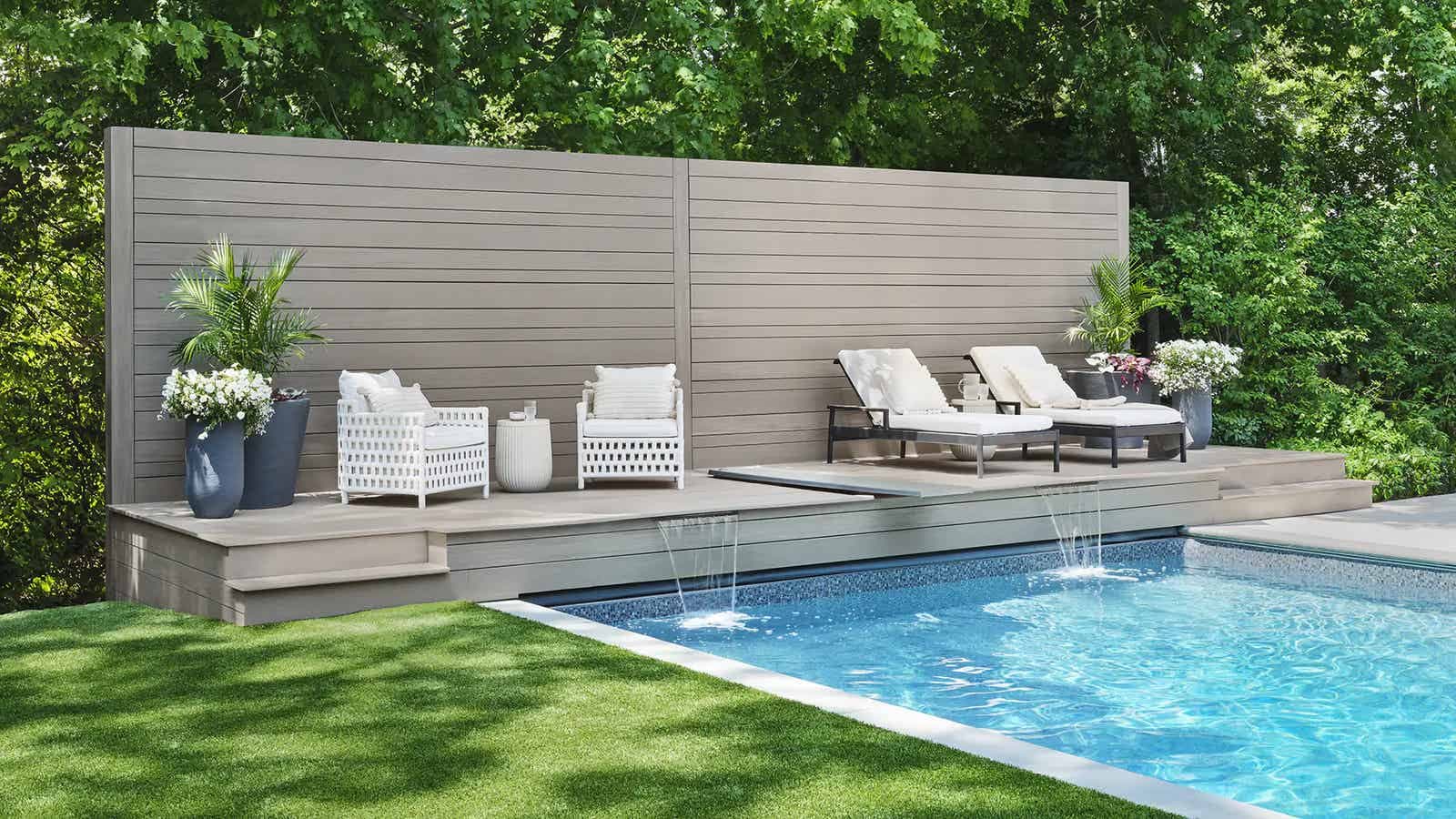
Understanding AZEK PVC Decking for Commercial Use
AZEK PVC Decking is a premium capped polymer decking product, distinct from wood-composite alternatives due to its zero wood content. This composition means the boards are fully synthetic, with an Alloy Armour Technology cap over a polymer core. This structure is designed to resist moisture absorption, rot, and insect damage, which are critical considerations for high-traffic, spill-prone commercial environments.
The material's resistance to swelling and mold growth, even on cut ends, contributes to its suitability for areas exposed to frequent cleaning and potential liquid spills. For a restaurant patio, where sanitation and appearance are paramount, these properties can translate into a more durable and hygienic surface.
AZEK PVC Decking is available in several collections, including Vintage, Landmark, and Harvest. Each offers different aesthetic profiles, from wire-brushed, low-gloss finishes in the Vintage Collection to cathedral grain patterns in the Landmark Collection, allowing for diverse design choices to match a restaurant's brand and ambiance. Board profiles typically include 1x5.5-inch and 1x7.25-inch options, with lengths up to 20 feet, enabling various layout possibilities.
Designing for High Traffic and Seating Layouts
A restaurant patio must accommodate heavy foot traffic and flexible seating arrangements. When designing with AZEK PVC Decking, consider the structural support required for commercial loads. While the decking itself is durable, the underlying joist system must be engineered to meet local commercial building codes for live loads. This is a crucial step that requires a qualified engineer or architect.
For seating layouts, AZEK PVC Decking offers flexibility with both grooved edges for hidden fasteners (such as US4 hidden clips) and square edges for face-fastening with compatible stainless steel screws. Hidden fasteners create a smooth, uninterrupted surface, which can be advantageous for moving chairs and tables without snagging. The choice of fastening method should be discussed with the installer to ensure it meets both aesthetic and functional requirements.
Consider board widths and patterns to define zones on the patio. Using the wider 7.25-inch boards from the Vintage Collection can create a more expansive feel, while alternating widths or using picture-frame borders can delineate dining areas from walkways or service zones. Always account for furniture placement and circulation paths to ensure ease of movement for both staff and patrons.
Maintenance and Cleaning for a Commercial Setting
One of the primary advantages of AZEK PVC Decking for a restaurant patio is its relatively low maintenance compared to traditional wood. The non-porous nature of the capped polymer is designed to resist staining from common spills like food and beverages. This is particularly important in a commercial kitchen or dining environment where quick cleanup is essential to maintain hygiene and appearance.
Regular cleaning typically involves sweeping or blowing off debris, and then washing with soap and water. For tougher spills, manufacturer-approved cleaning products specific to PVC decking should be used. It is important to avoid abrasive cleaners or harsh chemicals that could damage the surface or void any warranties. Always consult the latest manufacturer guidelines for approved cleaning agents and methods.
The material's resistance to mold and mildew is also beneficial, reducing the need for intensive scrubbing or chemical treatments often required for wood decks in humid or shaded conditions. This contributes to operational efficiency and maintains a presentable surface for customers.
A Hypothetical Patio Project: The "Corner Bistro"
Let's consider a hypothetical restaurant, "The Corner Bistro," planning a new outdoor patio measuring 24 feet by 15 feet. They want a sophisticated, low-maintenance surface that can withstand heavy use. They've chosen AZEK Vintage Collection in English Walnut for its wire-brushed, low-gloss appearance and rich tone.
The patio will be designed with a primary dining area and a narrow service path. For the main dining area (20 ft x 15 ft), they plan to use 5.5-inch wide grooved-edge boards, laid perpendicular to the building. The service path (4 ft x 15 ft) will use the same 5.5-inch boards but laid parallel to the building, creating a subtle visual distinction.
For the 20 ft x 15 ft dining area, with boards running the 15-foot direction, they will need 15-foot lengths. The width of 20 feet, divided by the 5.5-inch board width (0.458 feet), requires approximately 43.6 boards. Rounding up, they would purchase 44 boards of 16-foot length (to allow for cuts to 15 ft). For the 4 ft x 15 ft service path, with boards running the 15-foot direction, they need 4-foot lengths. The width of 15 feet, divided by 0.458 feet, requires approximately 32.7 boards. Rounding up, they would purchase 33 boards of 16-foot length, cutting them to 4 feet. The offcuts from the 16-foot boards cut to 4 feet would be 12 feet, which could be used for other sections or kept as spares, depending on the overall layout and waste optimization. This example assumes a standard structural support system and minimal waste from cuts. An actual project would require a detailed cut plan.
The Bistro also plans a picture-frame border around the entire 24 ft x 15 ft perimeter using square-edge boards of the same color. This requires 24 ft + 24 ft + 15 ft + 15 ft = 78 linear feet. Allowing for mitered corners and some waste, they might order 5-6 additional 16-foot boards.
Specification Review and Professional Guidance
Before finalizing any material selection for a commercial project, a thorough specification review is essential. This involves consulting with architects, engineers, and experienced contractors. They can ensure that the chosen decking material, structural components, and installation methods comply with all relevant commercial building codes, ADA requirements (if applicable), and local regulations.
Key aspects of the specification review include verifying the structural integrity of the sub-structure for anticipated commercial loads, confirming appropriate ventilation requirements for the deck assembly, and ensuring proper spacing between boards as per manufacturer instructions. AZEK PVC Decking typically requires specific gapping to allow for thermal expansion and contraction, which can be more pronounced in large commercial installations.
Additionally, discuss the fastening system in detail. While hidden fasteners offer a clean look, ensure they are approved for commercial use and installed correctly to prevent any movement or hazards. For face-fastened boards, confirm the use of corrosion-resistant fasteners that are suitable for long-term outdoor exposure and frequent cleaning.
Before you order
- Verify local commercial building codes for live load requirements for outdoor patios.
- Consult with an architect or engineer for structural design and sub-structure specifications.
- Confirm AZEK PVC Decking is approved for commercial use in your jurisdiction.
- Select an AZEK collection and color that complements the restaurant's aesthetic and anticipated foot traffic.
- Determine board widths and lengths to optimize layout and minimize waste.
- Choose between grooved (hidden fastener) or square (face-fasten) edge boards based on aesthetic and functional needs.
- Plan for proper deck ventilation and board spacing according to manufacturer guidelines.
- Establish a routine cleaning and maintenance plan using manufacturer-approved products.
- Review ADA compliance requirements for ramps, transitions, and surface evenness if applicable.
- Obtain a detailed material quote based on exact dimensions, profiles, and quantities.
Confirm installation details, approved uses and warranty terms in the current instructions for the exact product and profile. Your installer should verify the substrate, structure and applicable project requirements.
Questions to help you decide
Is AZEK PVC Decking suitable for all climates and seasons in a commercial setting?
AZEK PVC Decking is designed for outdoor use and is resistant to rot, insects, and moisture, making it suitable for a wide range of climates. However, local climate conditions can influence thermal expansion and contraction, which is why proper installation with adequate board spacing and ventilation is critical. For areas with extreme temperature fluctuations, consulting the manufacturer's installation guide and local experts is recommended to ensure optimal performance.
How does AZEK PVC Decking compare to hardwood decking for restaurant patios?
AZEK PVC Decking offers a low-maintenance alternative to hardwood. It requires no sanding, staining, or sealing, and resists rot, insects, and moisture. Hardwood decking, such as Ipe, offers a natural aesthetic and exceptional density but requires regular maintenance, including cleaning, oiling, and occasional sanding, to preserve its appearance and extend its lifespan. The choice depends on the desired aesthetic, maintenance budget, and operational priorities of the restaurant.
Can AZEK PVC Decking be installed over an existing concrete patio?
Installing AZEK PVC Decking over an existing concrete patio is possible, but it requires a properly designed sub-structure to ensure adequate ventilation, drainage, and structural support. The existing concrete must be sound, level, and have proper drainage. A sleeper system or a raised deck frame would typically be constructed on top of the concrete to support the decking boards and allow for airflow beneath, preventing moisture buildup. This type of installation requires careful planning and adherence to manufacturer guidelines for ventilation.
Ready to Plan Your Restaurant Patio with AZEK PVC Decking?
For a material quote and to confirm current availability and service options for your commercial project, please provide your project dimensions, desired AZEK profile, and ZIP code.
Request a material quote →