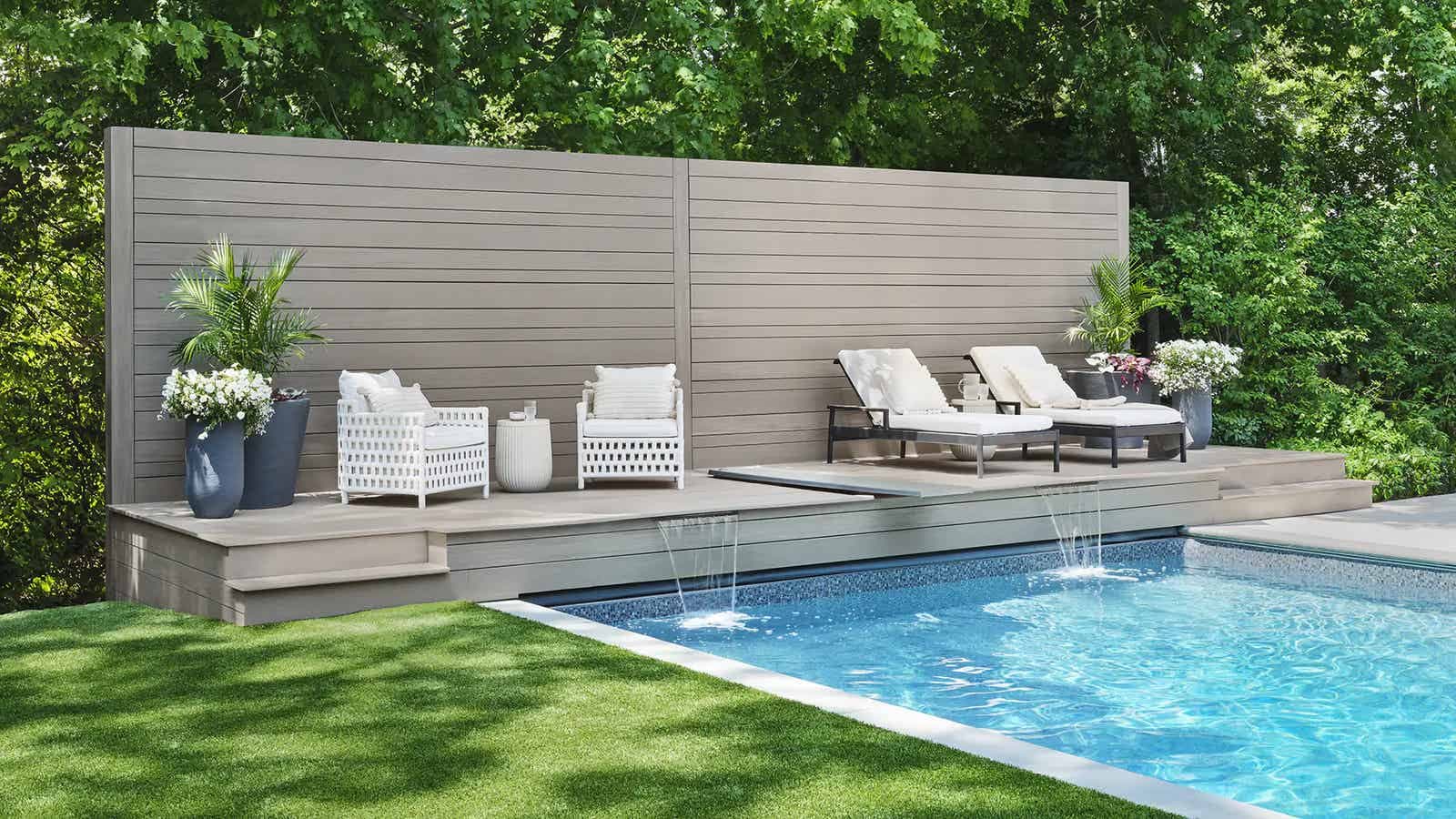
Why AZEK PVC Decking for a Covered Porch?
AZEK PVC Decking is a capped polymer board with zero wood content. These properties are particularly beneficial in a covered porch setting, where consistent ventilation might be different from an open deck, and moisture can sometimes linger despite the cover. The material's resistance to moisture absorption helps maintain its dimensional stability over time.
The Alloy Armour Technology cap provides resistance to stains and fading, which is an advantage even in a covered area where indirect sunlight can still contribute to wear. AZEK PVC Decking is also designed to run cooler than comparable composite colors, a benefit that can enhance comfort on a porch, especially during warmer seasons. Its premium aesthetics, with wire-brushed and cathedral-grain textures, offer a refined look that can mimic reclaimed hardwood without the associated upkeep.
AZEK offers a full system of matching risers, fascia, and rail lines, which can help create a cohesive design for your covered porch project. This integrated approach simplifies material coordination and ensures compatibility across different components of your porch structure.
AZEK PVC Decking is made with up to 60 percent recycled content and is fully recyclable at the end of its life, aligning with sustainable building practices. This material is available in three collections: Vintage, Landmark, and Harvest, each offering distinct aesthetics from wire-brushed, low-gloss boards to multi-tonal color blends and subtle graining in classic tones. These options provide flexibility to match various design preferences for your covered porch.
The Vintage Collection offers 5-1/2" and 7-1/4" widths, while the Landmark and Harvest collections are available in 5-1/2" widths. These choices allow for flexibility in layout and installation methods.
For additional information, you can explore the full range of AZEK PVC Decking options at our product page: [Azek Premium PVC Decking](/brands/azek).
Considering Light and Shade on Your Porch
Even a covered porch experiences varying levels of light and shade throughout the day. The orientation of your porch, the depth of the overhang, and any surrounding landscaping will influence how much direct or indirect sunlight reaches the decking. AZEK PVC Decking's resistance to fading is beneficial in these conditions, helping to maintain its appearance over time.
While AZEK PVC decking is designed to run cooler than comparable composite materials, darker colors will still absorb more heat than lighter ones. Consider the overall exposure of your porch and your comfort preferences when selecting a color. For porches with significant indirect sunlight, lighter tones from the Harvest Collection, such as Slate Gray, or the Vintage Collection's Coastline, might be preferable for their cooler surface temperatures. If your porch is heavily shaded, you might have more flexibility to choose richer, darker tones like English Walnut from the Vintage Collection or Kona from the Harvest Collection without significant heat concerns. Requesting physical samples can help you visualize how colors will appear in your porch's specific lighting conditions.
Integrating Thresholds and Transitions
A key design element for a covered porch is the transition from the interior of your home to the outdoor space. This often involves a threshold at the doorway. When planning, consider the finished height of your AZEK PVC decking relative to the interior flooring. A smooth, minimal step-down is often preferred for accessibility and a seamless flow.
AZEK PVC decking boards have a nominal profile of 1" x 5-1/2" (with Vintage also offering 7-1/4" width). Your sub-structure and joist height will need to be carefully planned to achieve the desired finished deck height. If your porch connects to other outdoor elements like a walkway, patio, or landscaping, plan for appropriate transitions. This might involve using a contrasting border board, a small step, or a ramp, depending on the elevation differences. Ensure any transition materials are compatible with AZEK PVC decking in terms of expansion and contraction.
Ventilation and Moisture Management for Covered Spaces
Although covered, porches can still accumulate moisture, especially in humid climates or areas prone to rain splash. Proper ventilation beneath the deck is crucial to prevent moisture buildup and ensure the longevity of the deck frame. Even with zero-wood-content PVC decking, the substructure (often wood) requires protection.
Design your porch with adequate airflow by leaving appropriate spacing between decking boards. AZEK PVC Decking is available with grooved edges for use with hidden fasteners, which naturally create consistent spacing between boards. Consult the specific AZEK installation guidelines for recommended board spacing to ensure proper drainage and ventilation for your project. If your porch is enclosed on multiple sides, consider additional measures like lattice skirting or vents to promote air circulation beneath the deck surface. While AZEK PVC decking itself resists moisture, protecting the underlying structure is essential for a durable porch.
Worked Example: A 10' x 16' Covered Porch
Let's consider a hypothetical covered porch measuring 10 feet deep by 16 feet wide, extending from the back of a house. The homeowner wants a classic look with minimal maintenance, choosing AZEK PVC Vintage Collection in Weathered Teak, using 16-foot grooved edge boards for a seamless, lengthwise run.
The nominal width of an AZEK board is 5-1/2 inches. To cover the 10-foot depth (120 inches), we divide 120 inches by 5.5 inches per board, which equals approximately 21.8 boards. Since boards must be purchased as full units, 22 boards would be needed for the main field.
If a picture frame border is desired, this calculation would change. For example, a single border board running along the perimeter would require two 16-foot boards (for the front and house-side edges) and two 10-foot boards (for the side edges). Since AZEK boards come in 12, 16, and 20-foot lengths, you would purchase one 16-foot board for each long side and one 12-foot board for each short side, cutting it to 10 feet. This results in two 16-foot boards and two 12-foot boards for the border. The interior field would then be slightly smaller, requiring a recalculation for the main decking. This example assumes no waste from cutting and that offcuts are not reusable for other parts of the project.
This example simplifies the calculation. Actual projects require accounting for waste, potential diagonal layouts, and specific cutting plans.
Before you order
- Assess your porch's sun exposure and ventilation to guide color selection.
- Plan thresholds and transitions carefully for seamless integration with interior and exterior spaces.
- Verify the finished height of the decking relative to existing structures.
- Ensure adequate ventilation for the substructure beneath the covered deck.
- Select AZEK collection and color based on aesthetic preference and performance considerations.
- Determine board width and length requirements to minimize seams and waste.
- Choose between grooved (hidden fastener) or square (face fastener) edge options.
- Consider complementary AZEK fascia and riser boards for a cohesive look.
Confirm installation details, approved uses and warranty terms in the current instructions for the exact product and profile. Your installer should verify the substrate, structure and applicable project requirements.
Questions to help you decide
Does AZEK PVC decking get hot in a covered porch?
AZEK PVC decking is designed to run cooler than comparable composite colors, making it a comfortable choice for covered porches. While covered, indirect sunlight can still reach the deck. Lighter colors will generally feel cooler underfoot than darker colors. If your porch receives significant indirect sun, a lighter shade from collections like Vintage or Harvest might be a good option.
How do I ensure proper drainage and ventilation on a covered porch with AZEK decking?
Even though a porch is covered, proper drainage and ventilation are essential, especially for the substructure. Ensure there is adequate spacing between AZEK decking boards as specified in the manufacturer's installation guidelines. This allows for water runoff and air circulation. If your porch design limits natural airflow, consider incorporating vents or lattice skirting to promote air movement beneath the deck surface and protect the frame from moisture buildup.
Can I use AZEK PVC decking with a custom border or picture frame on my covered porch?
Yes, AZEK PVC decking is suitable for custom borders and picture frames. The availability of both grooved edge and square edge boards allows for flexible design options. Square edge boards are typically used for borders and fascia, creating a clean, finished look. When planning, account for the additional material needed for border boards and any cuts required to achieve your desired design. AZEK also offers matching fascia and riser boards to complete the look.
Ready to Plan Your AZEK PVC Covered Porch?
Request a material quote with your project dimensions, desired AZEK profile, and ZIP code. We can confirm current availability and service options for your project.
Request a material quote →