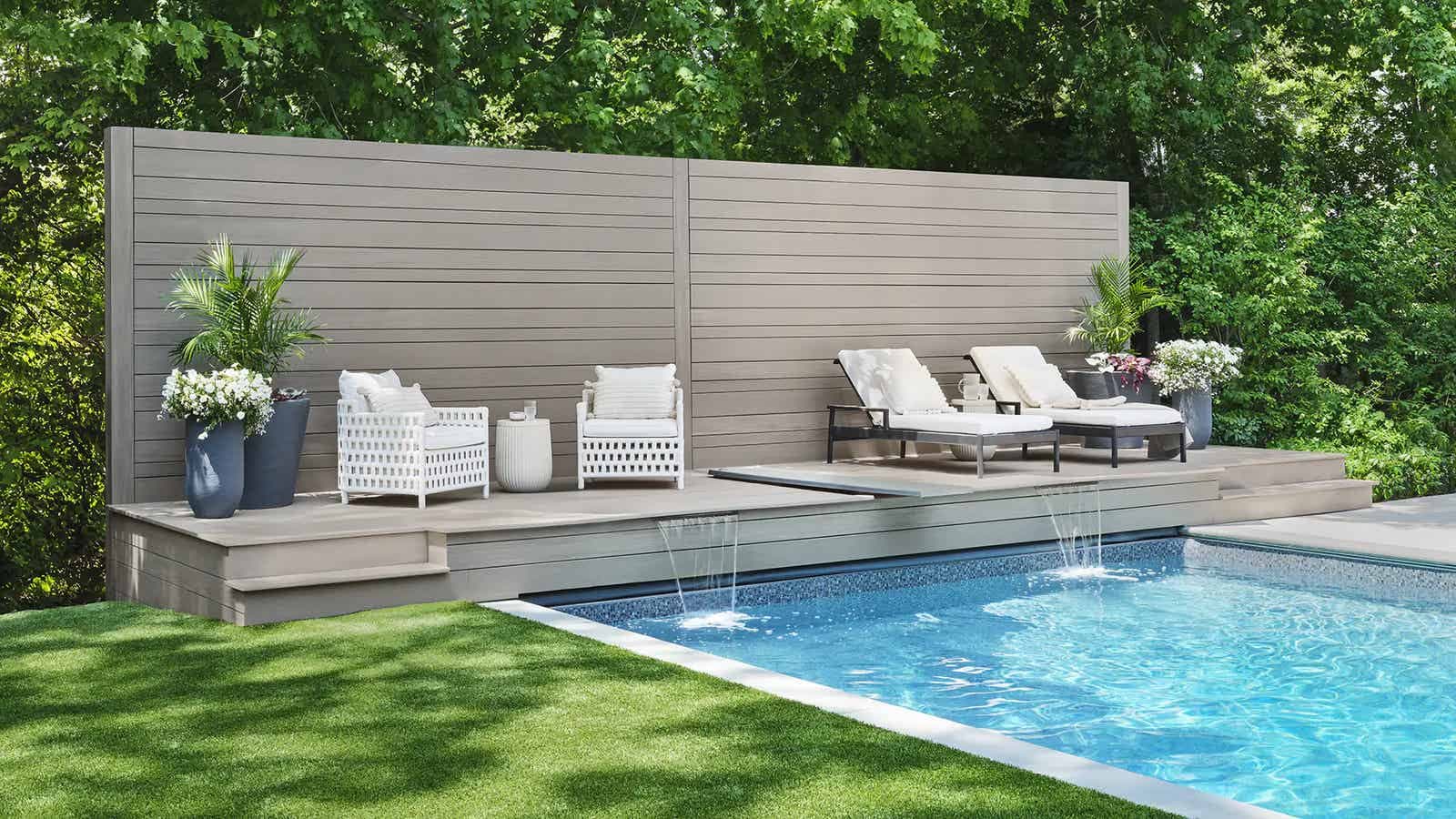
The Challenge of Coastal Environments for Decking
Coastal homes are exposed to a unique combination of environmental stressors. Consistent salt spray can accelerate corrosion of metal fasteners and degrade wood fibers. High humidity promotes mold and mildew growth, while intense UV radiation causes fading and material breakdown. Traditional wood decking, even pressure-treated options, often requires rigorous sealing and maintenance schedules to withstand these conditions. Composite decking, while more resilient than wood, may still contain wood fibers that can be susceptible to moisture absorption and subsequent issues.
AZEK PVC Decking is a capped polymer board with zero wood content. This fundamental difference is key to its performance in demanding coastal settings. Unlike materials with wood components, AZEK PVC is designed not to rot, swell, or feed mold, even when cut ends are exposed. This inherent resistance simplifies long-term maintenance in high-moisture, saline environments.
AZEK PVC Decking: Material Properties for Coastal Resilience
AZEK PVC Decking is constructed with an Alloy Armour Technology cap over a fully synthetic core. This all-polymer composition provides a robust barrier against the elements. The zero-wood content means there's no organic material for salt to penetrate and no moisture absorption that could lead to swelling, warping, or fungal growth, which are common issues in coastal regions.
The resistance to moisture and insects makes AZEK PVC a suitable choice where humidity is consistently high and marine borers or other pests are a concern. While all materials will experience some degree of weathering, the polymer composition is engineered for color retention in challenging conditions.
Choosing Compatible Fasteners for Salt Air
Even the most resilient decking material needs appropriate fasteners to secure it in a coastal environment. Standard galvanized or uncoated steel fasteners are prone to corrosion from salt spray, which can lead to loosening boards, rust stains, and structural compromise over time. For AZEK PVC Decking, the manufacturer recommends specific fasteners to ensure long-term performance.
Stainless steel, particularly grade 305 or higher, offers superior corrosion resistance in saline conditions. Hidden fastening systems, such as the US4 clips, also minimize exposed metal, further protecting against salt-induced corrosion and maintaining a clean deck surface. When planning your project, always confirm the fastener grade and material to ensure suitability for your specific coastal exposure.
You can explore compatible US4 fasteners here: /brands/us4
Warranty Considerations for Coastal Applications
When selecting decking for a coastal home, it is important to review the full warranty document for any specific exclusions related to marine environments or proximity to saltwater. Generally, warranties cover manufacturing defects and material performance under normal use.
While AZEK's zero-wood content is inherently resistant to many coastal challenges, proper installation, including adequate ventilation and adherence to spacing guidelines, remains crucial to maintaining warranty coverage and overall deck performance. For example, ensuring proper drainage and airflow beneath the deck helps prevent moisture buildup, even with a rot-resistant material.
A Hypothetical Coastal Deck Project: Planning with AZEK
Consider a hypothetical coastal home project: a 12-foot by 20-foot deck overlooking the ocean. The homeowners desire a low-maintenance material that can withstand constant salt spray and intense sun. They prefer the look of weathered wood but want the durability of PVC.
For this project, the AZEK Vintage Collection in 'Coastline' (a wire-brushed, low-gloss grey tone) would be a strong aesthetic match. The deck requires 240 square feet of decking. AZEK boards are available in 12, 16, and 20-foot lengths, typically 1 inch thick by 5.5 inches wide. To minimize waste and seams for a 12x20 deck, using 20-foot boards for the 20-foot dimension would be efficient. The 12-foot dimension would require roughly 26 boards (12 feet * 12 inches/foot / 5.5 inches/board = 26.18 boards). For a 20-foot length, this means 26 boards * 20 feet = 520 linear feet. Given a 5.5-inch width, each 20-foot board covers approximately 9.17 square feet. Therefore, 240 sq ft / 9.17 sq ft/board = approximately 27 boards. To account for cuts and a small buffer, ordering 28-30 boards would be a practical approach.
The grooved edge option would be selected for use with US4 hidden clips, ensuring a clean, fastener-free surface and enhanced corrosion resistance. The deck frame would be designed with adequate ventilation to promote airflow beneath the deck, further enhancing the longevity of the entire system in the humid coastal climate. This planning ensures both aesthetic goals and long-term performance are met.
Before you order
- Assess the specific level of salt exposure (direct spray vs. salt air).
- Confirm local building codes for deck materials in coastal zones.
- Select AZEK PVC Decking collection and color (e.g., Vintage, Landmark, Harvest).
- Choose grooved or square edge boards based on preferred fastening method.
- Plan for adequate under-deck ventilation to prevent moisture buildup.
- Review AZEK's full warranty document for any coastal-specific terms.
- Consider matching AZEK fascia and risers for a cohesive look.
- Verify board lengths to optimize layout and minimize waste.
Confirm installation details, approved uses and warranty terms in the current instructions for the exact product and profile. Your installer should verify the substrate, structure and applicable project requirements.
Questions to help you decide
Is AZEK PVC Decking resistant to salt water?
Yes, AZEK PVC Decking is engineered with zero wood content, making it highly resistant to moisture absorption and the corrosive effects of salt water and salt spray. This helps prevent issues like rot, swelling, and deterioration commonly associated with wood-based materials in coastal environments.
What kind of fasteners should I use for AZEK PVC Decking near the ocean?
For coastal applications, it is crucial to use corrosion-resistant fasteners.
Does AZEK PVC Decking fade in intense coastal sun?
AZEK PVC Decking features an Alloy Armour Technology cap designed for enhanced fade resistance. While all materials will experience some degree of weathering, the polymer composition is engineered for color retention.
Ready to Plan Your Coastal Deck with AZEK PVC Decking?
Request a material quote today. Provide your project dimensions, desired AZEK collection and profile (e.g., Vintage Collection, grooved edge), and your ZIP code to confirm current availability and service options.
Request a material quote →