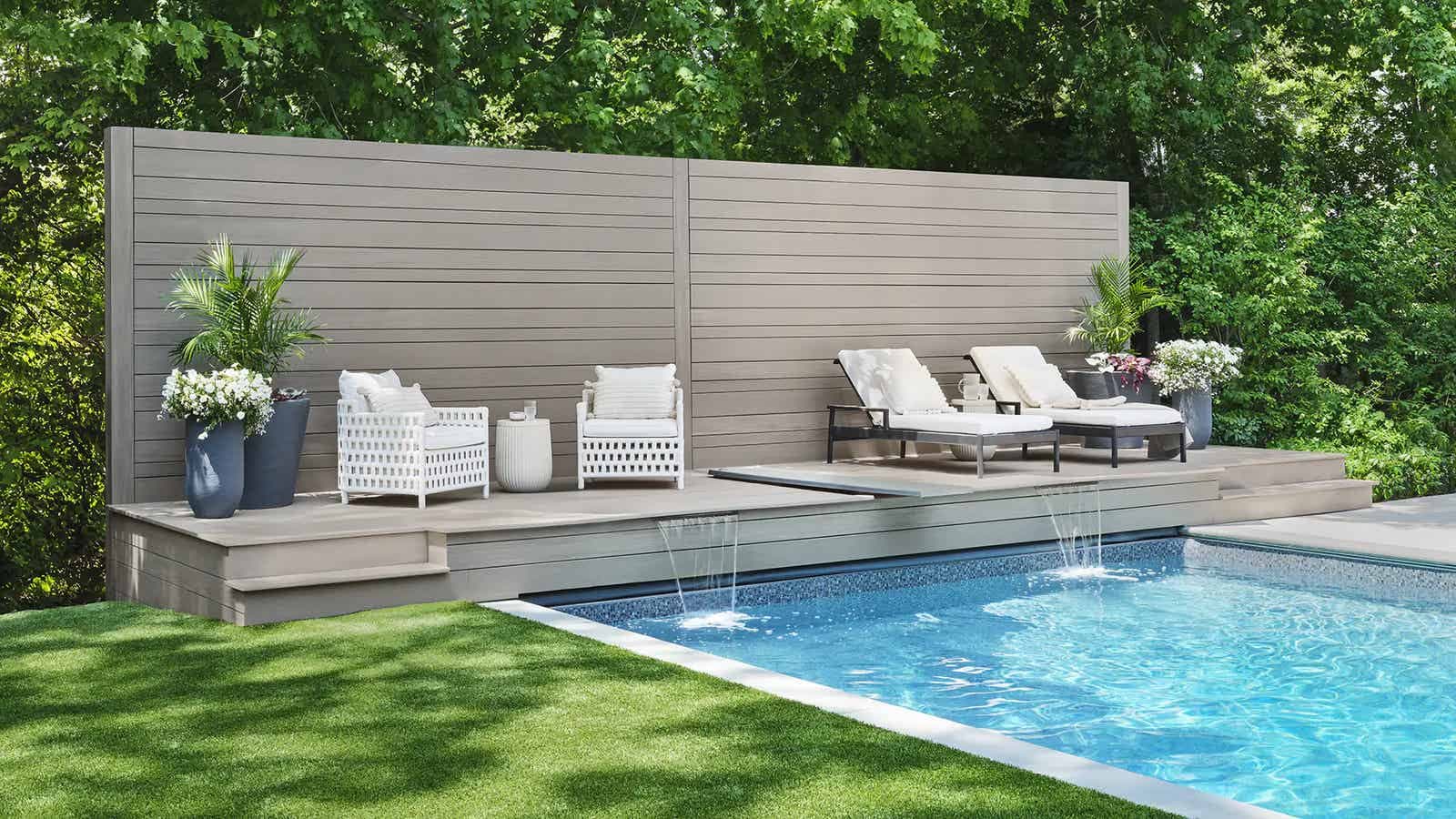
Available AZEK PVC Decking Board Lengths
AZEK PVC decking boards are available in standard lengths designed to accommodate a wide range of deck sizes and layouts. These lengths are typically 12 feet, 16 feet, and 20 feet. All three AZEK collections—Vintage, Landmark, and Harvest—offer these standard lengths.
Knowing these fixed lengths is the first step in planning your deck. Your goal is to select the most efficient combination of lengths to cover your deck area with the fewest cuts and minimal unusable offcuts. This reduces both material cost and installation time.
Understanding Seam Placement and Staggering
Seams occur where two board ends meet. For a visually appealing and structurally sound deck, these seams should be carefully planned. A common practice is to stagger seams across the deck surface, avoiding a continuous line of seams that runs perpendicular to the board direction.
Staggering seams helps distribute stress and creates a more natural, less repetitive look. While AZEK PVC decking has zero wood content, meaning it resists rot and swelling even at cut ends, proper seam placement is still vital for aesthetics and to maintain consistent spacing. Always refer to the manufacturer's specific installation guidelines for end-to-end spacing requirements.
Planning for Deck Dimensions: A Worked Example
Let's consider a hypothetical rectangular deck measuring 18 feet by 12 feet. The decking boards will run along the 18-foot dimension.
Option 1: Using 12-foot boards. This would require one 12-foot board and a 6-foot piece cut from another 12-foot board, resulting in a 6-foot offcut. For each 18-foot run, you would need two 12-foot boards. The seam would be at the 12-foot mark.
Option 2: Using 20-foot boards. This would require one 20-foot board, which would then be cut down to 18 feet, leaving a 2-foot offcut. This is less efficient as the 2-foot piece is unlikely to be reusable for a typical deck board layout.
Option 3: Combining lengths (e.g., a 16-foot board and a 2-foot piece). This is generally not advisable unless the 2-foot piece can be sourced from a reusable offcut elsewhere. Buying a 12-foot board to cut a 2-foot piece would be wasteful.
For an 18-foot run, the most practical approach is often to use a 12-foot board and a 6-foot piece. If you have multiple 18-foot runs, you can optimize by cutting one 12-foot board into two 6-foot pieces. For example, if you have two 18-foot runs, you could use two 12-foot boards (total 24 feet) and cut a 6-foot piece from each. This leaves two 6-foot offcuts. Alternatively, if you have many such runs, you could buy 12-foot boards and cut them in half to get two 6-foot pieces, using fewer total boards but increasing cuts.
The critical takeaway is to sketch your deck and mark out board lengths and seam locations. This visual planning helps identify where offcuts can be reused and minimizes waste. For an 18-foot run, two 12-foot boards allow for a 12-foot section and a 6-foot section. The remaining 6-foot offcut from the second board can then be used for another section, potentially reducing total material needed.
Minimizing Waste and Optimizing Cuts
To minimize waste, consider the following strategies:
1. **Staggered Seams:** Plan your seam locations so they are not aligned across adjacent rows. This improves aesthetics and distributes stress.
2. **Cut Planning:** Create a detailed cut list for each board length. Identify where longer offcuts can be used for shorter sections of the deck, such as perimeter boards or shorter runs.
3. **Board Orientation:** For decks with irregular shapes or multiple sections, consider how board orientation might affect the required lengths and potential for waste. Sometimes changing the direction of the boards can lead to more efficient use of standard lengths.
4. **Perimeter and Border Boards:** These areas often require shorter cuts. Plan to use offcuts from longer runs for these sections whenever possible.
5. **Order Slightly More:** While aiming for efficiency, it's prudent to order a small percentage (e.g., 5-10%) extra material to account for miscuts, unexpected damage, or future repairs. Discuss this with your supplier when requesting a quote.
Considerations for Different Deck Shapes
Rectangular decks are the most straightforward for length planning. For L-shaped, multi-level, or irregularly shaped decks, the planning becomes more complex:
**L-Shaped Decks:** Break the L-shape into two or more rectangles for planning purposes. Plan each section independently, but look for opportunities to use offcuts from one section in another.
**Multi-Level Decks:** Each level will have its own dimensions. Treat them as separate projects for board length planning, then look for efficiencies across levels.
**Diagonal Layouts:** A diagonal layout significantly increases the number of cuts and the amount of waste. While aesthetically distinct, it requires more material and more precise planning to manage board lengths and seams. This approach will inherently generate more offcuts.
Regardless of the shape, a detailed drawing that marks out each board, its length, and its seam location is invaluable.
Before you order
- Measure your deck dimensions accurately, noting both length and width.
- Sketch your deck layout, indicating the direction of the decking boards.
- Identify all available AZEK PVC decking lengths (12, 16, 20 feet).
- Determine the optimal board length or combination of lengths for your longest runs.
- Plan seam locations, ensuring they are staggered across rows.
- Create a cut list for each board, accounting for all sections of your deck.
- Identify opportunities to use offcuts for shorter sections or perimeter boards.
- Calculate the total number of boards needed for each length.
- Add a percentage for waste and potential miscuts (e.g., 5-10%).
- Confirm end-to-end spacing requirements with AZEK installation guidelines.
Confirm installation details, approved uses and warranty terms in the current instructions for the exact product and profile. Your installer should verify the substrate, structure and applicable project requirements.
Questions to help you decide
What are the standard lengths for AZEK PVC decking boards?
AZEK PVC decking boards are typically available in 12-foot, 16-foot, and 20-foot lengths across all collections, including Vintage, Landmark, and Harvest.
How do I minimize waste when cutting AZEK decking boards?
To minimize waste, carefully plan your deck layout and create a detailed cut list. Identify how longer boards can be cut to yield multiple usable pieces for different sections of your deck. Staggering seams and using offcuts for shorter runs or perimeter boards are key strategies. Ordering a small percentage of extra material is also recommended.
Can I use different length boards on my deck?
Yes, you can and often should use a combination of different length boards to achieve the most efficient layout and to create staggered seams. The goal is to select the most appropriate lengths to cover your deck's dimensions with minimal waste, while maintaining a consistent and aesthetically pleasing pattern.
Ready to Plan Your AZEK PVC Deck?
Request a material quote with your project dimensions, desired AZEK collection and profile, and your ZIP code. We can help confirm current availability and service options for your decking materials.
Request a material quote →